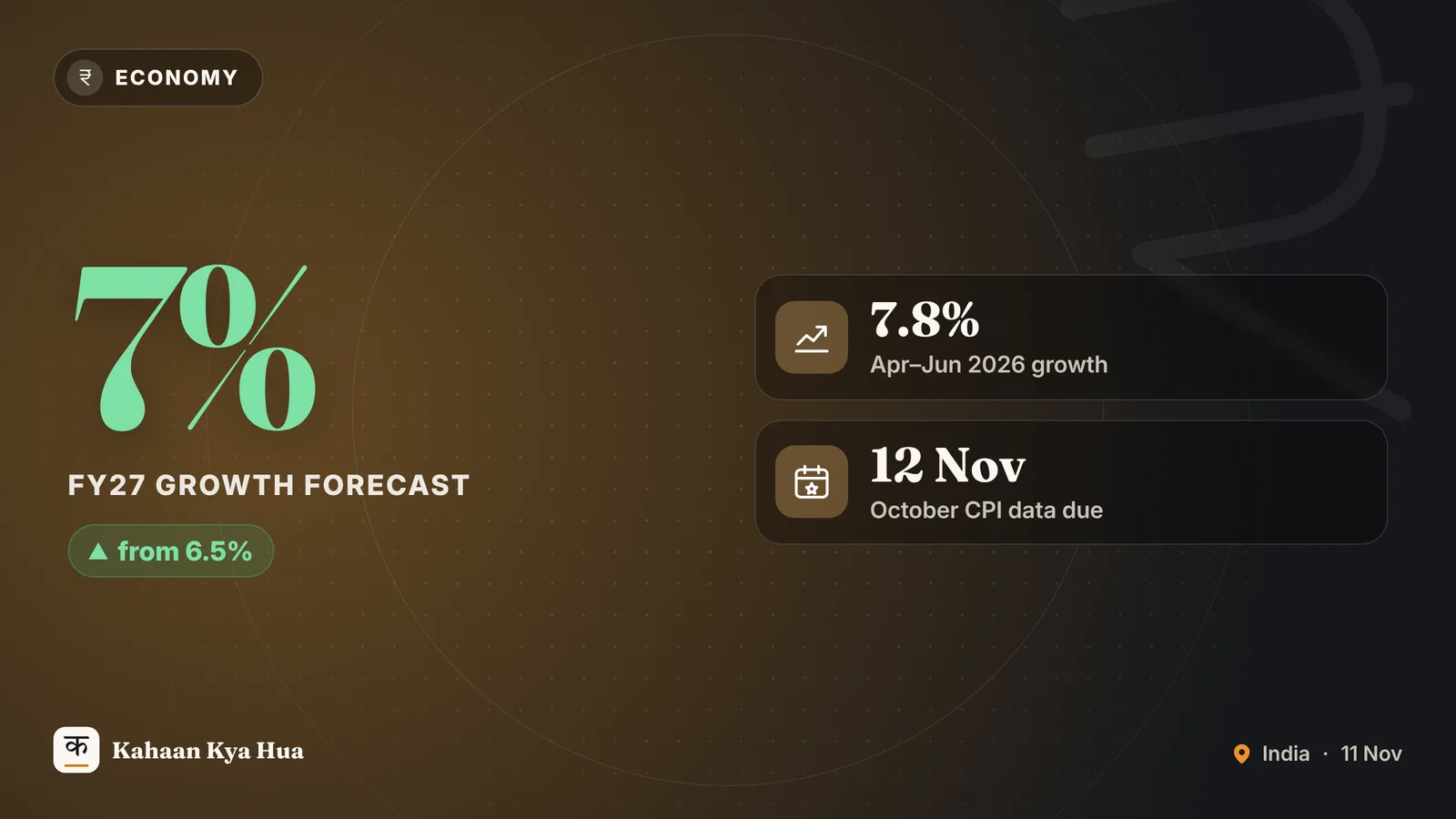
Moody's Ratings has raised its growth forecast for the Indian economy in the current financial year to 7 per cent, up from the 6.5 per cent it expected earlier. The upgrade appears in the agency's Global Macro Outlook 2027-28, released on Wednesday, and was reported by NDTV (from a syndicated feed) and India Today.
Why the forecast went up
Moody's says India has handled the global energy price shock better than it had assumed. The agency points to the country's ability to buy crude oil and gas from a wider set of suppliers, and to the way state-backed oil marketing companies and tax cuts kept the full impact away from consumers. It also notes that India has the world's largest single-site refining complex, which helped limit fuel supply problems and supports its refined product exports.
Moody's adds that consumption is strong and investment is improving. It cites high-frequency signs such as robust capital goods production and imports, faster industrial credit growth and rising capacity utilisation, which in its view suggest India could be at the start of a new private investment cycle after years of repairing company and bank balance sheets. Manufacturing and services purchasing managers' indices are expanding, and goods and services tax collections, vehicle sales and merchandise exports are growing at double-digit rates year on year.
India Today adds that the economy grew 7.8 per cent year on year in April to June 2026, ahead of expectations.
What Moody's expects next
The agency says the economy looks well placed to keep growing at close to 7 per cent over the medium term. If private investment picks up strongly, with a boost to manufacturing, jobs and productivity, growth could even go above its baseline.
The risks it flags
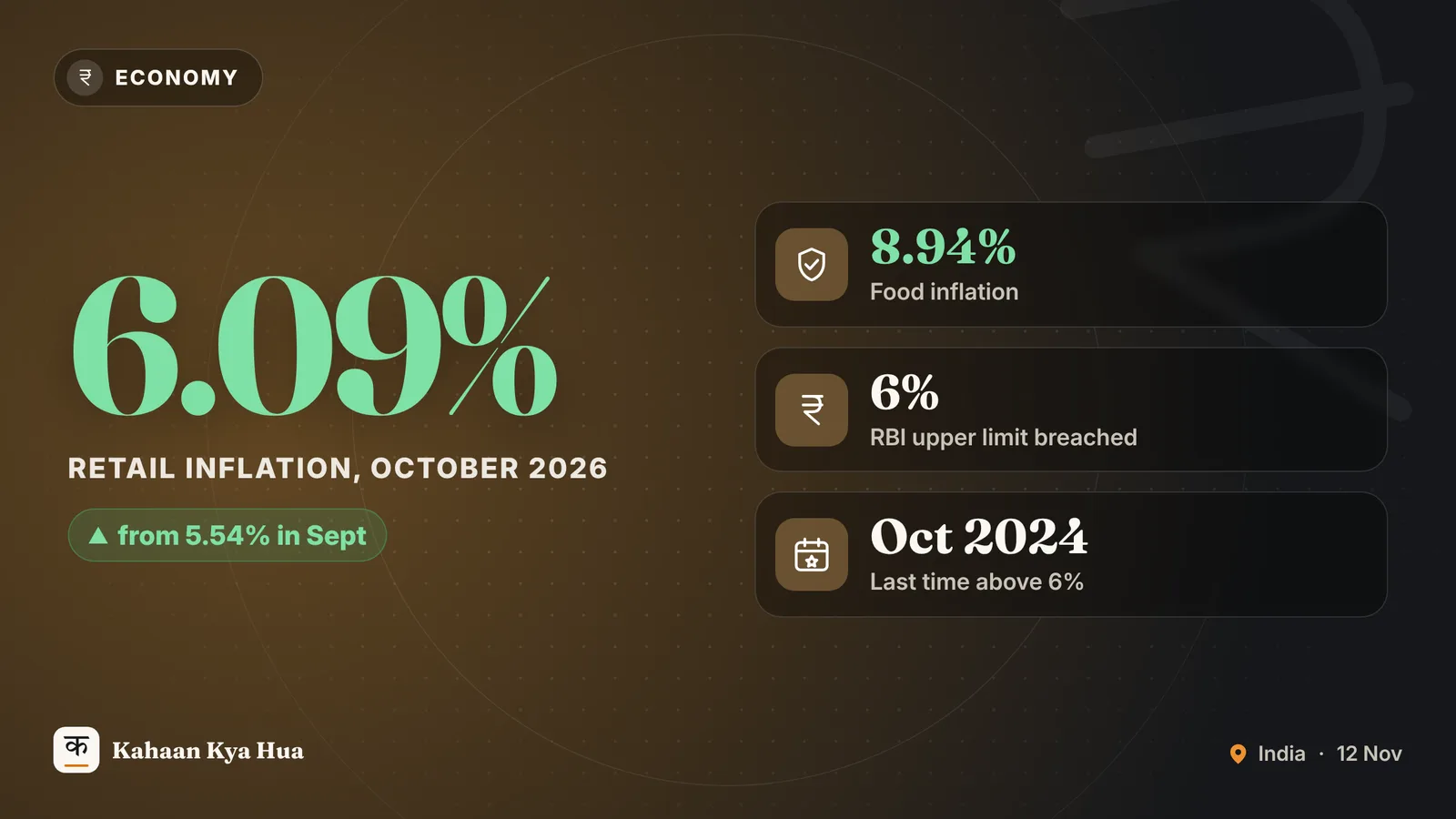
The upgrade comes with warnings. Moody's says household spending is exposed to what it calls intensifying and broadening price pressures, with headline inflation already near the top of the Reserve Bank of India's 2 to 6 per cent target range. A weak southwest monsoon and strengthening El Nino conditions could hurt farm output and rural demand. And with the RBI expected to raise rates further, tighter monetary policy could delay the recovery in private investment.
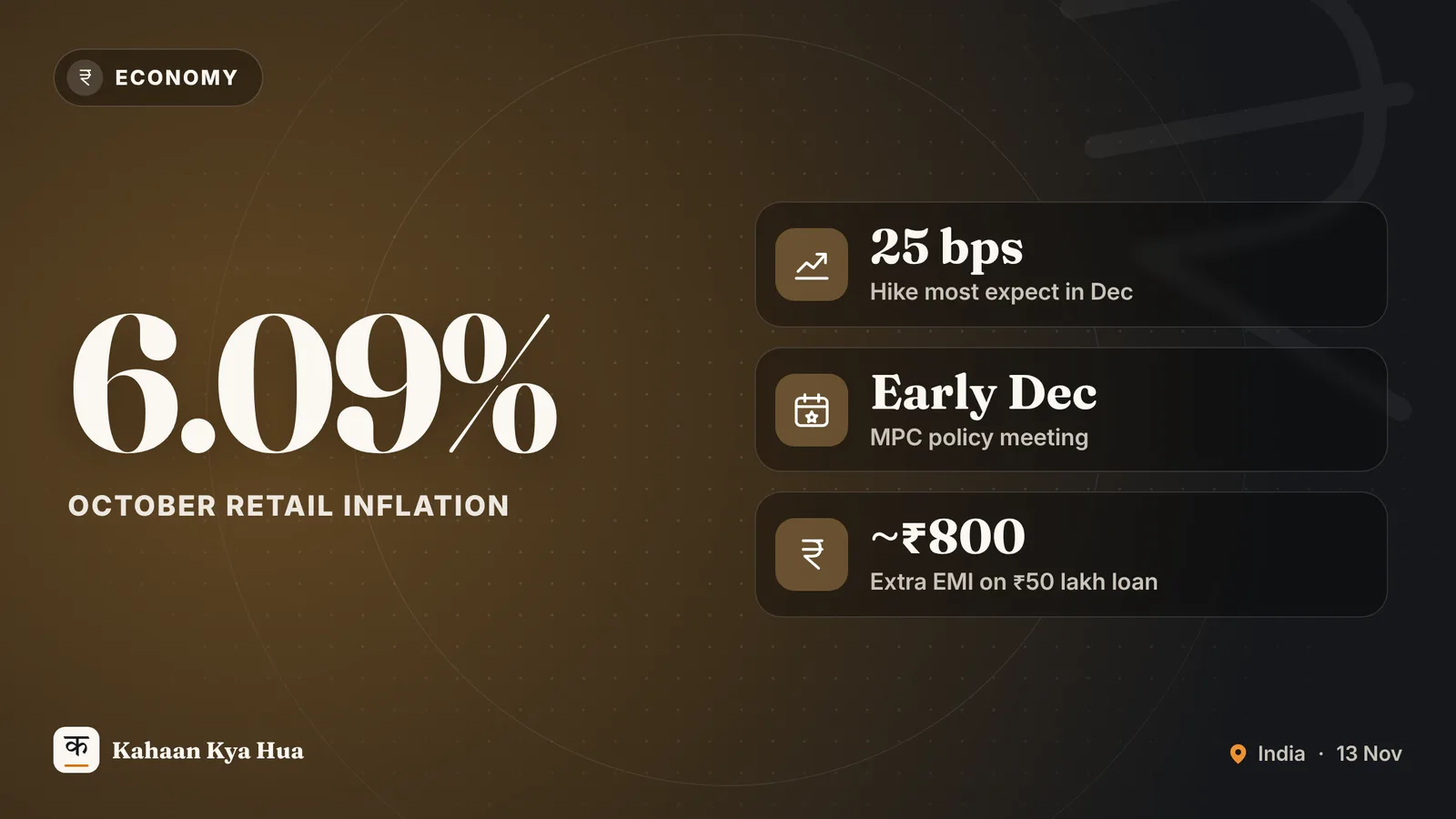
According to India Today, the RBI raised interest rates in October for the first time in almost four years, and markets are pricing in another 90 basis points of tightening over the next 12 months.
What it means for readers
A forecast is not a guarantee, and Moody's is one of several agencies and banks making such calls. For households, the more immediate question is prices. If inflation stays high and rates rise, loan EMIs and the cost of everyday items remain under pressure even while overall growth looks healthy. For businesses, the message is that demand and investment look supportive, but borrowing may get dearer.
What to watch on Thursday
India Today reports that October consumer price inflation data is due on Thursday, 12 November. Economists polled by Reuters expect headline inflation to rise to 5.93 per cent, which would put it close to the upper end of the RBI's tolerance band. That number will show whether the price pressure Moody's describes is already building. We will report the figure when it is released.