Prime Minister Narendra Modi used the centenary convention of the Federation of Indian Chambers of Commerce and Industry (FICCI) in New Delhi on Thursday, 19 November 2026, to ask India Inc a pointed question: the government has cut taxes, so where are the pay rises and the new jobs? Reports in Hindustan Times and The Times of India carried his remarks.
What did the Prime Minister say?
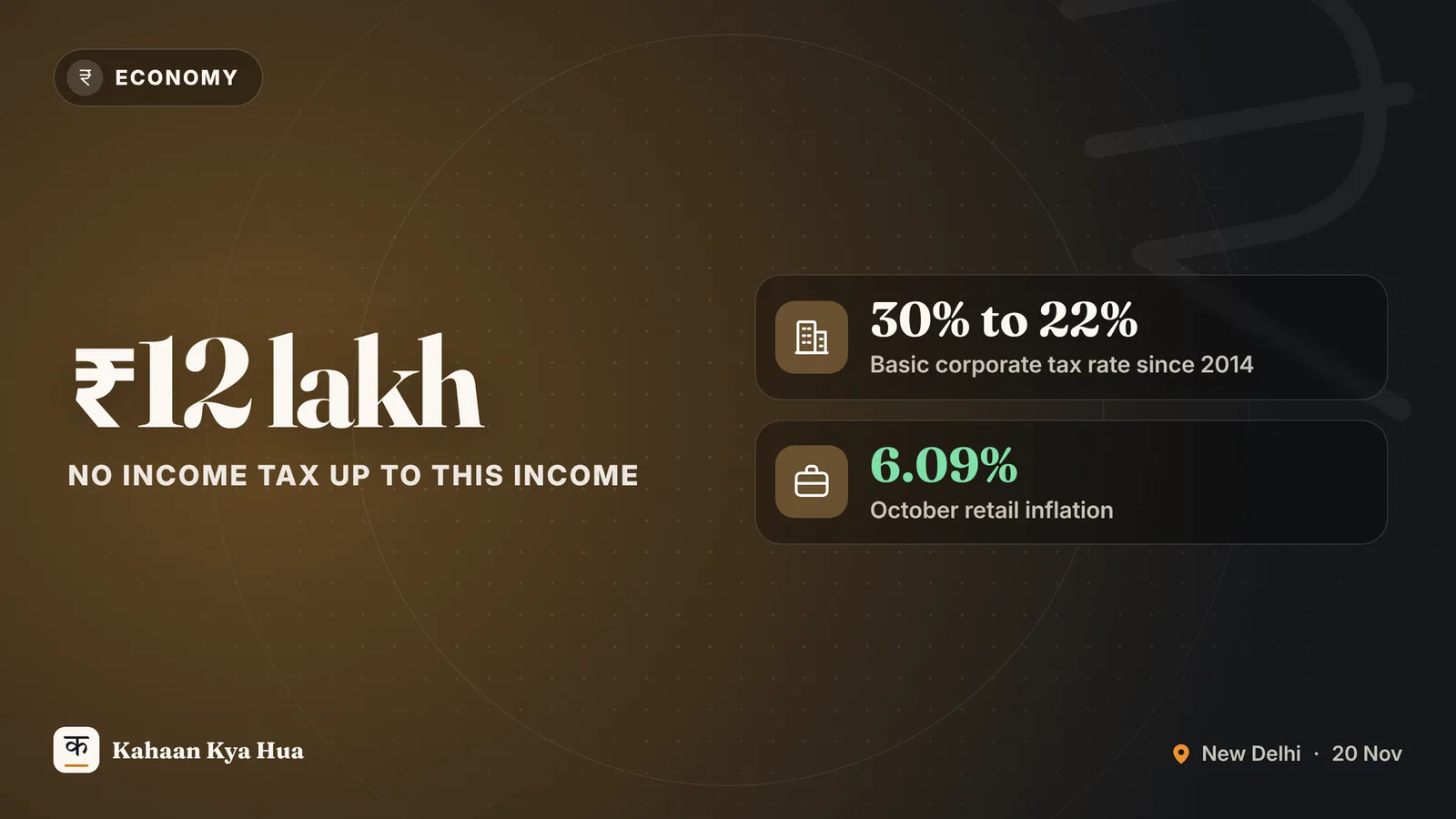
Mr Modi reminded the audience that the basic corporate tax rate stood at 30 per cent in 2014 and has since been brought down to 22 per cent. He also pointed out that individuals now pay no income tax on earnings up to ₹12 lakh. Turning to industry leaders, he asked whether companies had increased salaries or the number of employees after these reliefs. According to the reports, he said the attitude in some quarters had been that the government should act first while industry watches, and the room responded with laughter.
The Times of India reported that he said the government had taken the decision knowing industry might not be fully satisfied. Hindustan Times quoted him saying the tax relief had significantly raised the purchasing power of ordinary people. He also said the government had reduced GST rates and speeded up income tax refunds, so that money no longer stays stuck for months. On return filing, he said processing now takes about a week, compared with the long delays of earlier years.
Why does this matter for salaried people?
The remarks land at a time when households are watching prices closely. Retail inflation for October stood at 6.09 per cent, above the Reserve Bank of India's 6 per cent upper limit, which means that a salary that does not grow loses value every month. The tax cut leaves more money in a pay packet, but wage growth is what decides whether families feel better off. The Prime Minister's question puts a public spotlight on whether companies pass on gains from lower taxes to workers.
The Times of India noted that the comments came as business leaders are submitting wish lists to the finance minister ahead of the next Budget, and that companies cite cost pressure and weak demand even as investment shows signs of picking up. In other words, industry may argue that it needs relief before it can raise pay, while the government is saying relief has already been given.
A call to think beyond the domestic market
The speech was not only about wages. Mr Modi urged companies to see the large Indian market as a launchpad for global competition rather than a comfort zone. He asked them to make an "India First" approach the foundation of long-term investment decisions over the next 20 years. He wanted firms to use the opportunity created by the trade agreements that India is concluding.
He gave the pharmaceutical sector as an example. India is known as the pharmacy of the world for finished medicines, he said, but still imports large quantities of active pharmaceutical ingredients, bulk drugs and intermediates. He asked the industry to identify which of those can be made at home. The Times of India added that he also flagged steel and aluminium for a domestic manufacturing push. He used a simple comparison to make the point about adding value at home: it makes little sense, he said, to export wheat and import bread.
Growth figures he cited
The Prime Minister said India has moved from being counted among the so-called Fragile Five economies to being the fastest-growing major economy. He cited a World Bank report to claim that 500 million Indians have moved out of poverty over the past 12 to 13 years, and said merchandise exports of nearly USD 50 billion in October were the highest monthly goods exports so far. He added that global agencies including Moody's, S&P Global Ratings, Fitch, the World Bank and the Asian Development Bank have raised their growth projections for India, with growth expected at around 7 per cent. These are figures stated by the Prime Minister and reported by Hindustan Times; they were not independently audited in the reports.
What to watch next
Three things are worth watching. First, whether large employers announce hiring plans or wage revisions in the coming weeks. Second, what industry bodies ask for in their Budget submissions and whether those requests are tied to jobs. Third, the October and November inflation readings, which will show whether real incomes are keeping pace. For now, the Prime Minister has set a public expectation, and employees will judge it by their next appraisal letter rather than by the speech.