What the court found
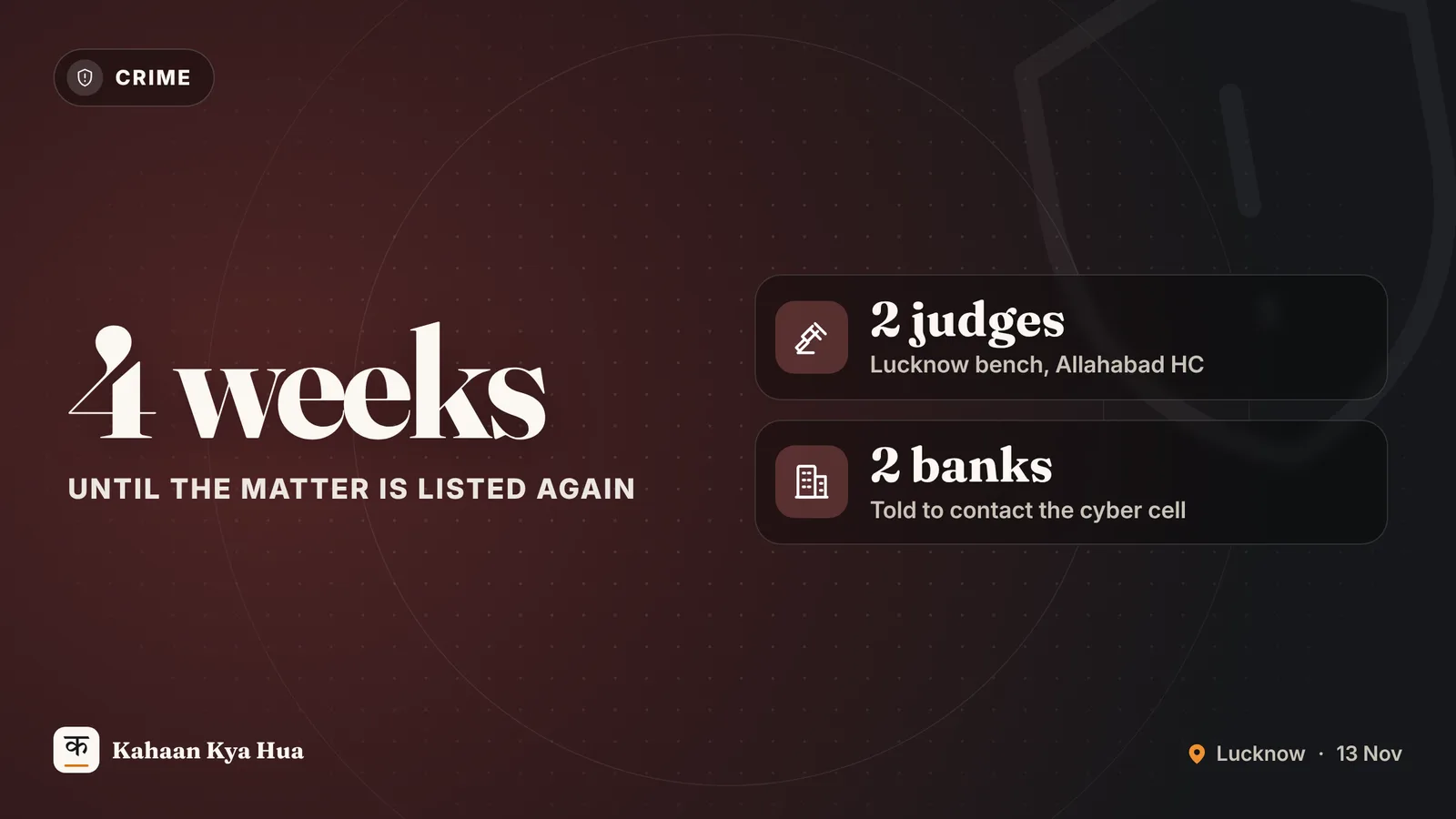
The Lucknow bench of the Allahabad High Court has ordered a police inquiry into a high school marksheet that appeared to have been made with artificial intelligence and was filed before it. The order came from a division bench of Justice Rajnish Kumar and Justice Babita Rani, and was reported by Hindustan Times, The Legal Affair and Live Law on 11 and 12 November 2026.
How it came to light
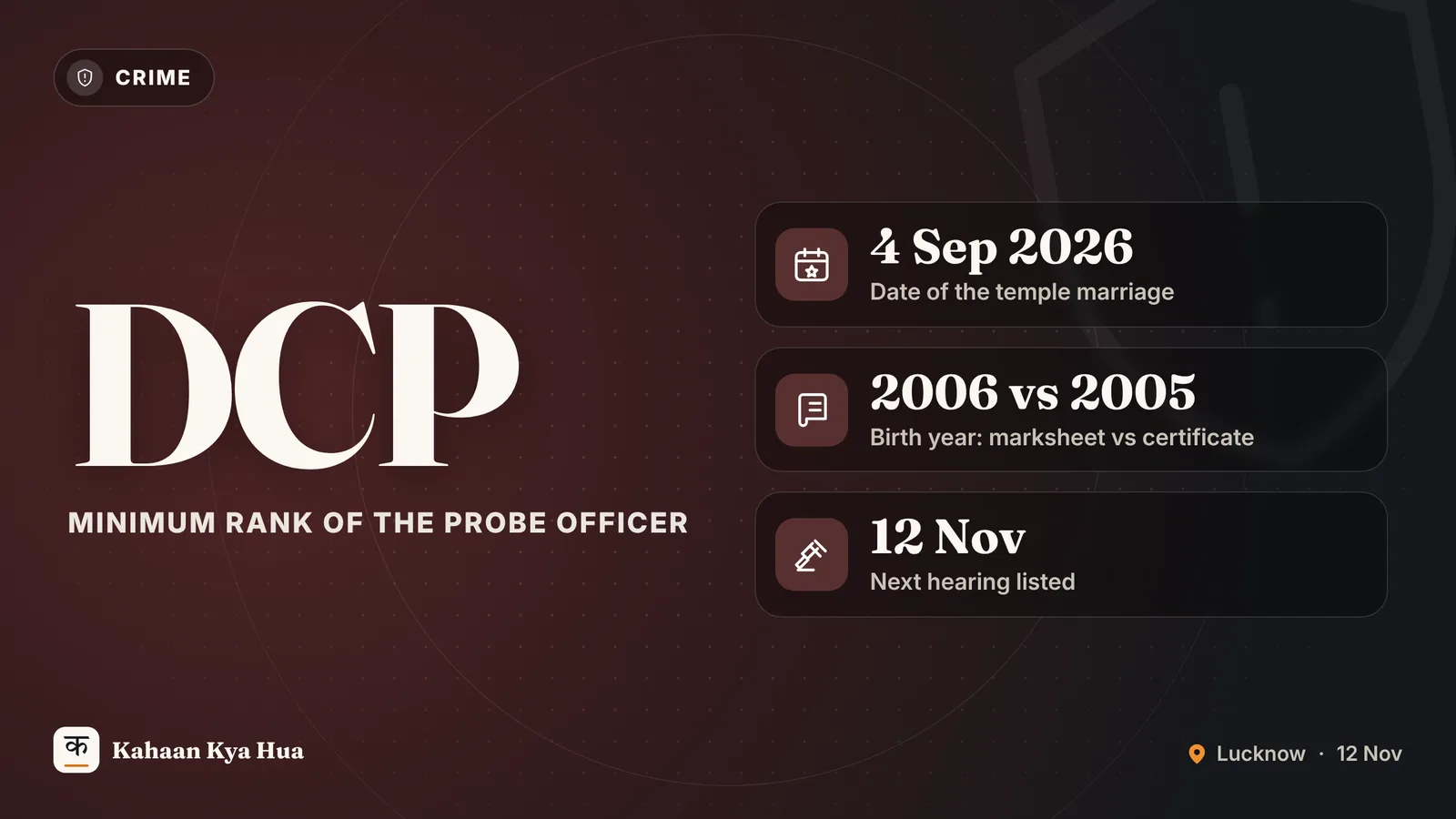
The case began as a routine writ petition. A couple said police were harassing them over their marriage, which, they said, was held at an Arya Samaj temple in Aliganj, Lucknow, on 4 September 2026. During the hearing, the judges noticed a mismatch in the date of birth of the second petitioner. According to Hindustan Times, the high school marksheet filed with the petition gave 29 July 2006, while the marriage certificate issued by the temple gave 29 July 2005.
That one-year gap led the court to compare the two documents, and it then found what the reports describe as substantial differences between two papers that claimed to be the same marksheet. The bench concluded that the one on record looked manipulated and AI-generated. The reports use the words “apparently” and “allegedly”, and so do we: the court has not yet named anyone as the person who made the document.
What the bench said
The judges observed that placing a forged or digitally altered document before the court is not just a matter of one person’s record. In their view it harms the dignity of the institution and weakens a litigant’s trust in the system. The Legal Affair adds that the court treated the issue as a threat to the integrity of the material on which judicial proceedings depend. The bench described the marksheet with a Latin legal phrase, calling it the “fruit of poisonous tree”.
The inquiry ordered
The court directed the Commissioner of Police, Lucknow, to appoint an officer not below the rank of deputy commissioner of police to hold a detailed inquiry. The Legal Affair says the aim is to find out who prepared the document, and whether anyone else helped create it or used it. The matter was listed again on Thursday, 12 November. We have not seen a report of what happened at that hearing.
Why the date of birth matters
None of the three reports explains why the date of birth was important to the case, so this is general context rather than something the court said. Indian law sets a minimum marriage age of 18 for women and 21 for men, and age is often questioned in cases where a couple seeks protection from police or family. A marksheet is the most common document used to prove a date of birth for school-educated people, which is why a doubtful one draws such close attention.
The wider concern
The episode is a reminder that AI image and document tools have made it easier to produce convincing fake certificates. Courts, colleges and employers have long relied on marksheets as proof, and a convincing fake can pass at first glance. Here, it was an ordinary cross-check, a mismatch between two documents, that exposed it. For readers, the practical lesson is simple: official records are checked against one another, and an altered or fake document can lead to a police inquiry.
What happens next
The police inquiry will decide who made the marksheet and whether any offence of forgery or use of a forged document is made out. Until the investigating officer reports, the matter remains an allegation. The petition about alleged police harassment is pending before the same bench, and the outcome of the inquiry may affect how the court treats it. We will update this report when more details of the hearing or the inquiry become public.