Sheikh Hasina, the former Bangladesh prime minister who has lived in India since August 2024, has asked for a new Bangladeshi passport and national identity card. Her lawyers say this is a formal step towards returning home around December. Dhaka has already signalled that it will not treat the request as routine.
What has been asked
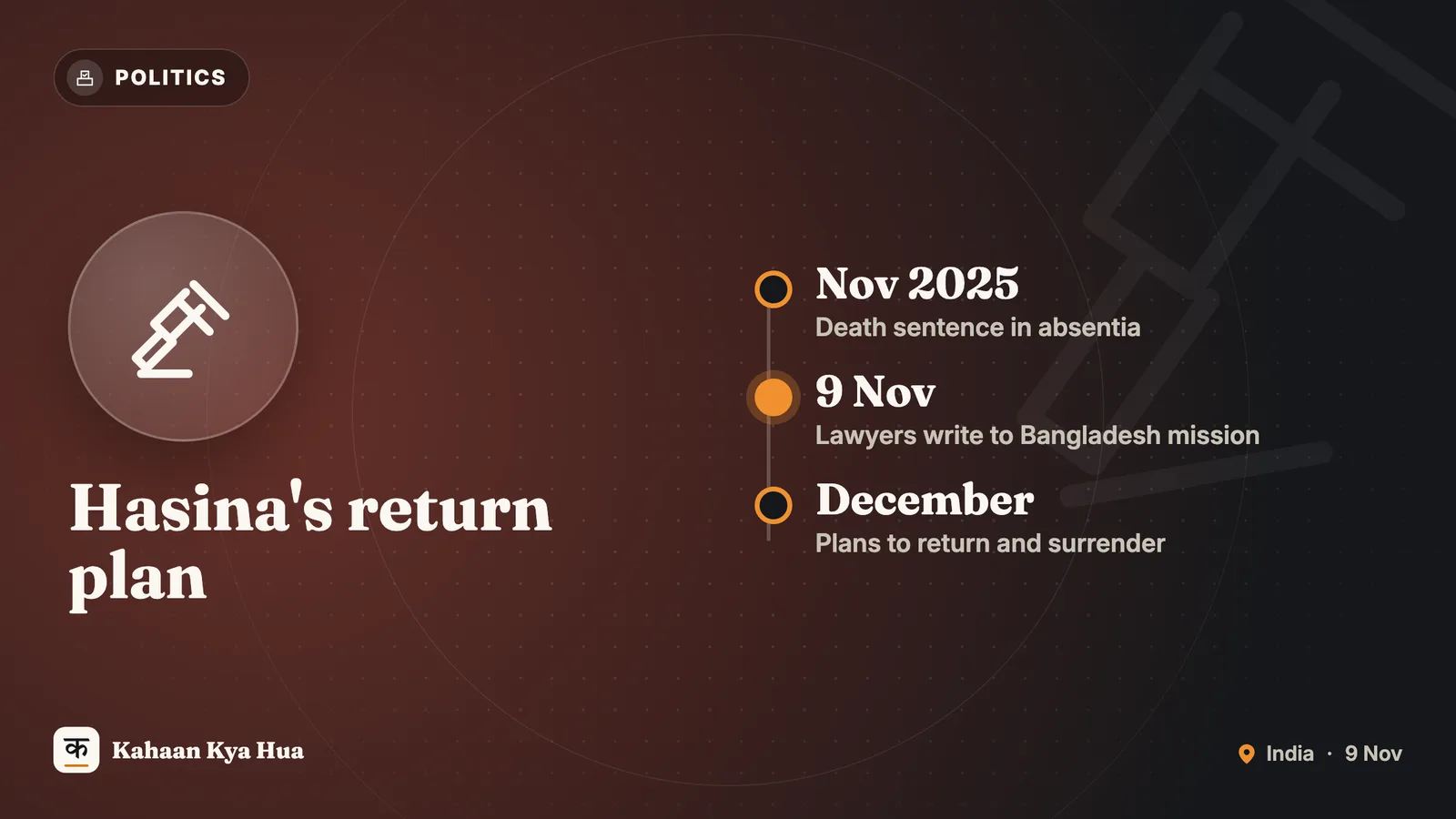
According to Business Today, which cites a Reuters report, a letter dated Monday, 9 November 2026, went from Hasina's lawyers at the London firm Matrix Chambers to Preeti Rahman, the acting high commissioner at Bangladesh's embassy in Delhi. The letter refers to the "reported revocation" of her existing passport and national ID card by the interim government and other authorities. It asks that the new applications be processed quickly, citing her Bangladeshi nationality and international human rights obligations.
Hasina, who is 78, told Reuters that she and senior Awami League colleagues plan to return around December and that she would surrender before a court. Her aides said a return date will be announced once the formalities are complete, according to the same report. The Week adds that this is her first attempt to return since leaving.
Why she left and what she faces
Hasina fled to India on 5 August 2024 after a student-led uprising ended her rule. In November 2025, a Bangladeshi war-crimes court sentenced her to death in absentia over the crackdown on that uprising. She denies the charges and calls the case politically motivated, as per Business Today. The Week notes that her Awami League is banned and many of its leaders are in jail or in exile.
Reuters, as quoted by Business Today, reports her saying: "They may arrest me on my return, they may even kill me. Still, I have to go."
How Dhaka has reacted
Dhaka has not welcomed the request. The Week quotes Bangladesh's state minister for foreign affairs, Humaiun Kobir, telling The Daily Star that an extradition treaty with India is in force, so she would not need a passport to be brought back. He called her a fugitive and a terrorist and asked, sarcastically, whether she was coming to visit her in-laws in Rangpur.
Business Today separately quotes State Minister for Foreign Affairs Shama Obaed Islam as saying Bangladesh is pursuing her repatriation through diplomatic channels, in line with established protocols. The two reports name different ministers; we have reported each as published and have not been able to reconcile the names.
Where India stands
India has not committed to handing her over. Business Today says New Delhi is examining Bangladesh's extradition request and wants to engage constructively with the new government in Dhaka. The Week says India has acknowledged the request and is reviewing it under its own legal and political considerations. The two sides are bound by a 2013 extradition treaty, amended in 2016, which The Week cites; the treaty's exact terms have not been independently checked by us.
Why it matters for India
Hasina's presence in Delhi has strained relations with Bangladesh since 2024. A planned return, or a refusal to issue her papers, would put the extradition question back in front of the Indian government. The Week quotes political observers who say her return could deepen divisions inside Bangladesh, while it could also ease strained ties with India.
What to watch
- Whether the Bangladesh mission in Delhi responds to the passport and ID request, and how.
- Whether Dhaka sends a fresh extradition note or press for a decision from New Delhi.
- Whether Hasina announces a return date. Her aides have said this will come only after formalities are done, and no date has been fixed.
No decision on the documents or on extradition has been announced by either government as of Monday afternoon.