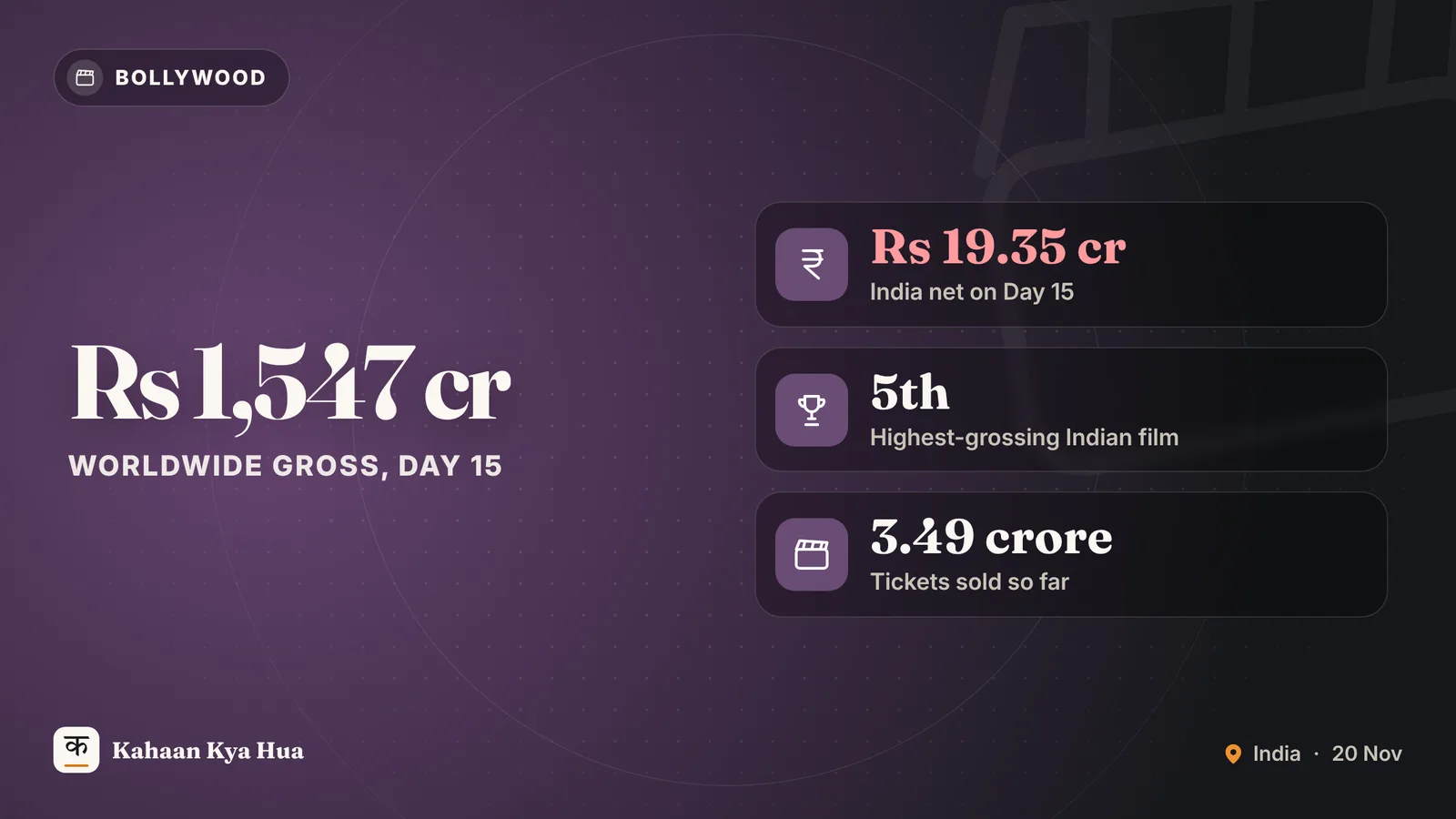
Ramayana: Part 1 has slowed down in its third week but is still setting records. Early tracker figures for Thursday, 19 November 2026, the 15th day since release on 5 November, show a worldwide gross of Rs 1,547.15 crore, according to reports in The Economic Times, India Today and The Times of India, all of which cite the tracker Sacnilk.
Day 15 numbers
The film earned an estimated Rs 19.35 crore net in India from 21,437 shows. That is 16.6 per cent lower than the previous day's Rs 23.20 crore. The Hindi version brought in Rs 14 crore, Malayalam Rs 1.75 crore, Tamil Rs 1.50 crore, Kannada Rs 1.40 crore and Telugu Rs 70 lakh.
India net collection now stands at Rs 863.75 crore and the India gross at Rs 1,032.15 crore. Overseas added Rs 5 crore on the day, taking the overseas gross to Rs 515 crore. Add these together and you get the worldwide gross of Rs 1,547.15 crore. India Today reports an estimated 9,28,188 tickets sold on the day, which takes the total to 3,48,95,085, or about 3.49 crore tickets.
Where it ranks
India Today says the film is now the fifth-highest-grossing Indian film worldwide. Dangal leads at Rs 2,070 crore, followed by Dhurandhar 2 at Rs 1,813.40 crore, Baahubali 2 at Rs 1,788 crore and Pushpa 2 at Rs 1,742 crore. Pushpa 2 is the next target, which means Ramayana needs roughly Rs 195 crore more in worldwide gross to move up a place. The same report says it is the third Hindi film in the Rs 1,500 crore club, after Dangal and Dhurandhar 2, and the sixth Indian film to cross Rs 1,000 crore in domestic gross.
The Economic Times adds that Ramayana has moved past the lifetime worldwide collection of KGF: Chapter 2, which that report puts at Rs 859.70 crore. A table in the India Today article lists KGF 2 at Rs 1,215 crore, so the two outlets do not agree on KGF 2's total. We have not used either figure for a ranking and suggest readers treat comparisons with older films carefully.
Fastest to Rs 1,500 crore, but sources differ on by how much
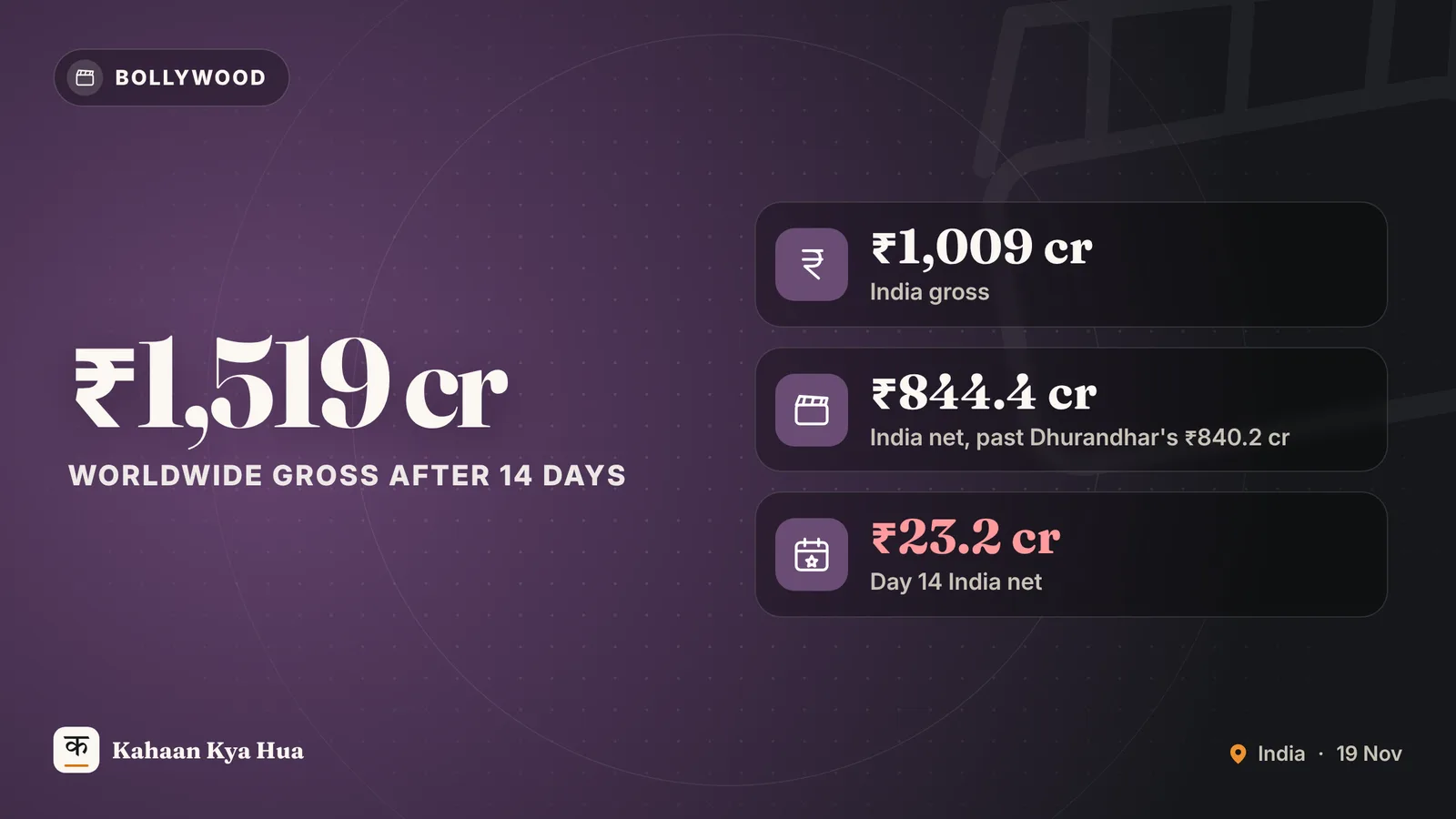
Both The Economic Times and India Today say Ramayana reached Rs 1,500 crore faster than any earlier Indian film. The Economic Times says the earlier record holder, Dhurandhar 2, took 15 days; India Today says 16. Pushpa 2 and Baahubali 2 took 17 or 18 days depending on the outlet. The tracker's own count for Ramayana is 14 days, with Rs 1,519.05 crore by the end of Day 14.
A steep drop from week one
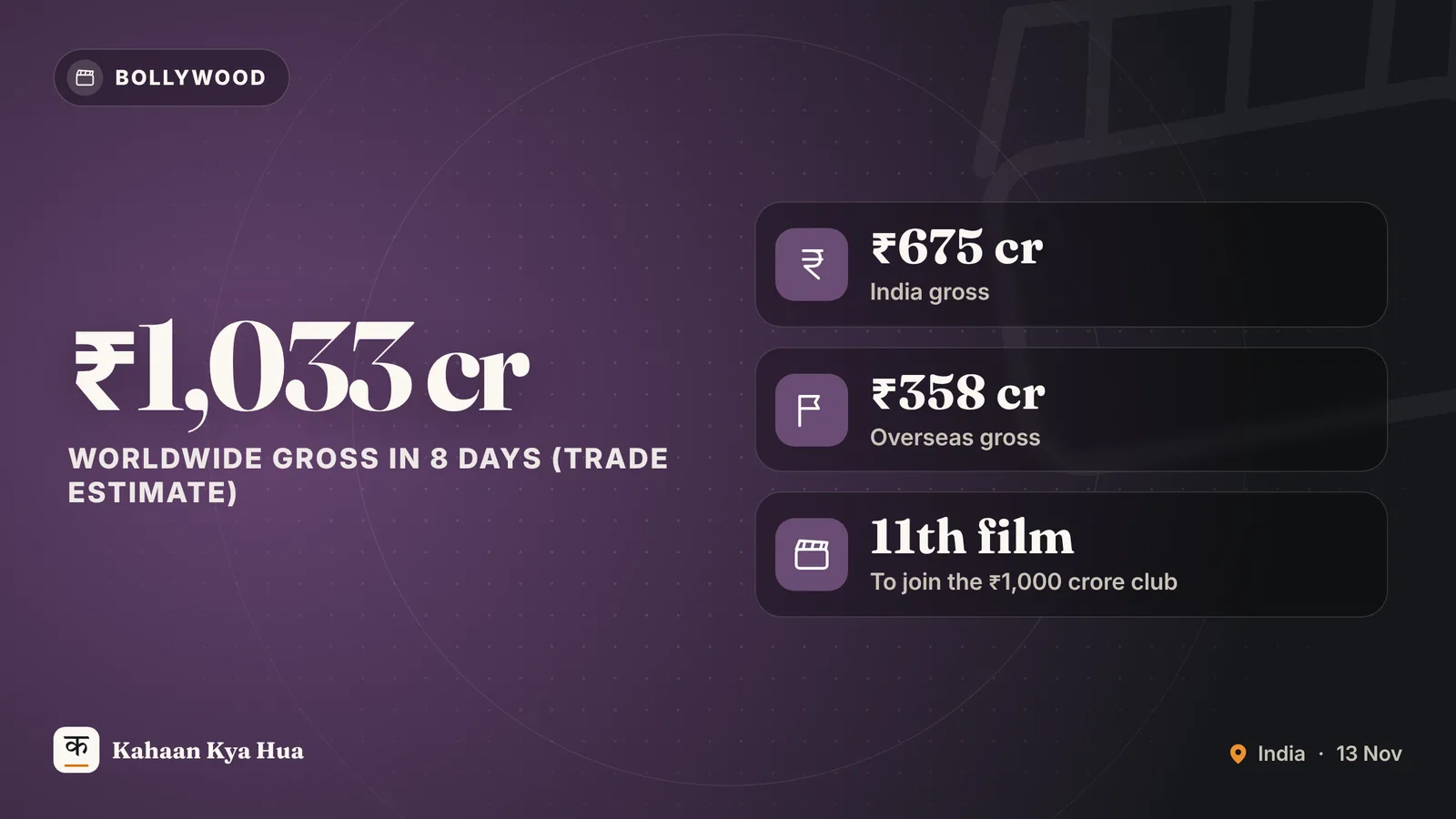
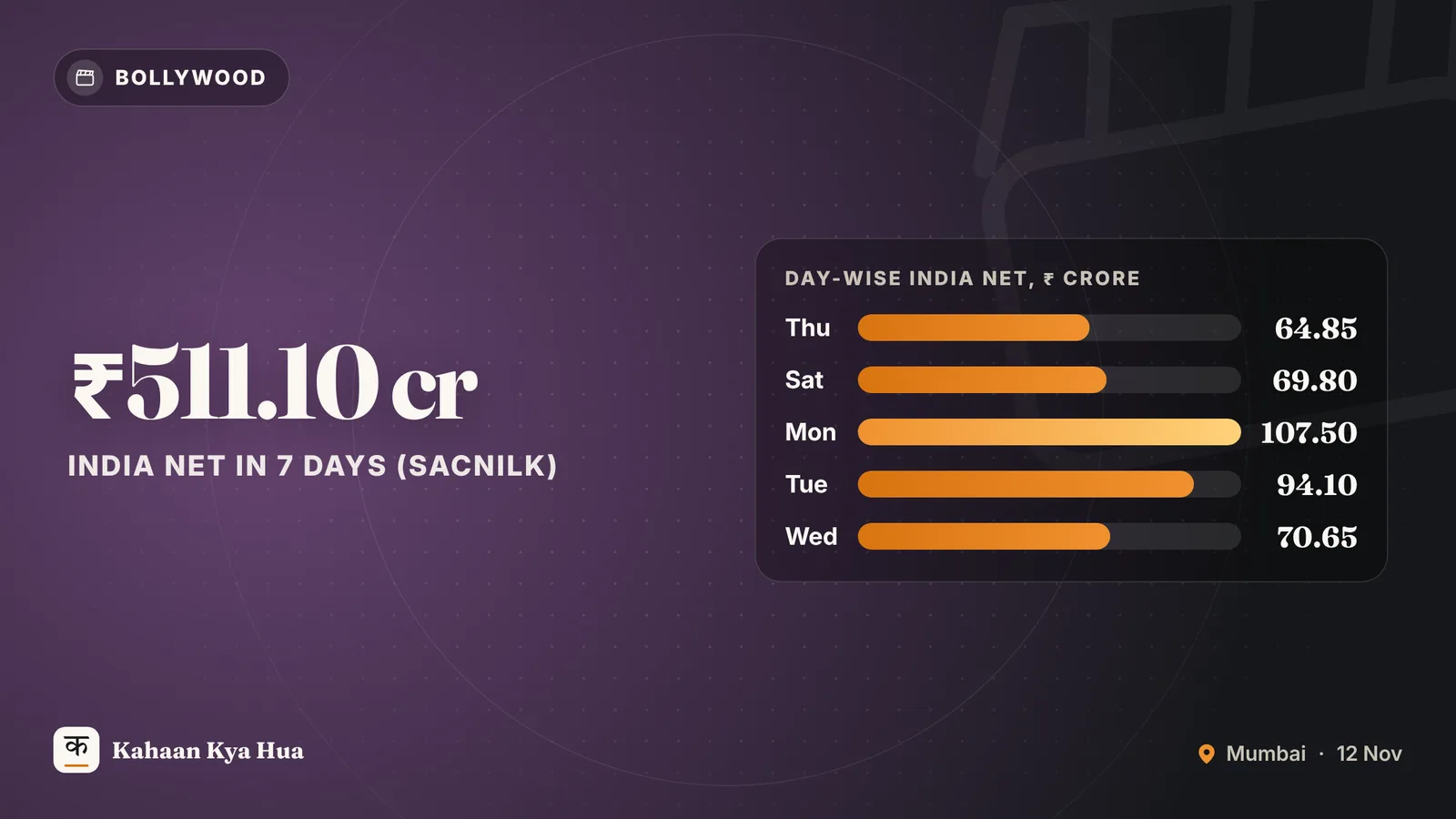
The Times of India notes that the film earned Rs 564.60 crore net and Rs 675.05 crore gross in its first eight days. In the next seven days it earned Rs 299.15 crore net and Rs 357.10 crore gross. That is a 47 per cent drop in net collections between the two periods. India Today reports that the second weekend alone brought in Rs 196 crore net, which it describes as a record, beating the previous mark of Rs 172.70 crore.
Who is watching
Occupancy figures for the day show how audiences are spread out. The Times of India reports the Malayalam version had the highest occupancy at 39.1 per cent, followed by Tamil at 23 per cent and Kannada at 22 per cent. Telugu was at 16.9 per cent and Hindi at 15 per cent overall. India Today puts the Hindi 3D version at 15.77 per cent on average, rising from 7.62 per cent in morning shows to about 20 per cent in the evening and night shows. Even so, Hindi remains the biggest contributor, with Rs 657.50 crore, or 76.1 per cent of India net collection so far, as per The Times of India.
The film stars Ranbir Kapoor as Rama, Sai Pallavi as Sita, Yash as Ravana and Ravi Dubey as Lakshman. It is directed by Nitesh Tiwari and produced by Namit Malhotra's Prime Focus Studios with DNEG and Yash's Monster Mind Creations. The Economic Times says a second part is expected on Diwali 2028.
What next
The third weekend, starting Friday 20 November, will show how long the film can hold its audience in cinemas. Daily collections have been falling, so a sharp drop would slow the climb towards Pushpa 2's Rs 1,742 crore. All figures here are early estimates from a tracker and not audited producer numbers. They can change by a few crore when final data comes in, so please treat them as indicative.